

How Tattooing Evolved from Subculture to Fine Art
Today, tattoos are widely recognized as a form of artistic expression. Collectors proudly wear intricate sleeves, portrait tattoos, and custom designs that rival the craftsmanship of traditional fine art. Galleries display tattoo-inspired works, and some tattoo artists are celebrated internationally for their artistic contributions. But tattooing wasn’t always viewed this way.
For much of modern history, tattoos existed on the margins of society — associated with sailors, soldiers, rebellion, and underground subcultures. Over time, however, tattooing evolved into a respected art form practiced by highly skilled artists around the world. At Brass Knuckles Ink Tattoo Studio in the Bronx, tattooing is approached as both craft and art. Every custom piece reflects a tradition that has transformed dramatically over the past century.
This article explores how tattooing evolved from subculture to fine art and why modern tattoo studios are redefining what tattoo artistry means today.
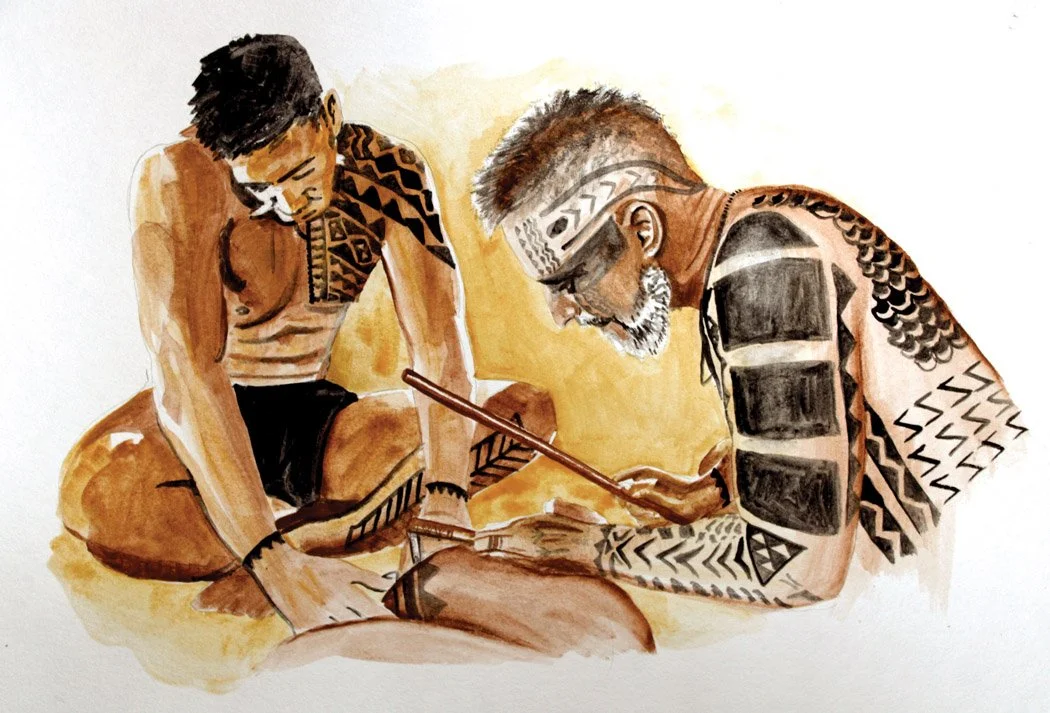
Kahuna Kā Uhi Keli‘i Makua hand-tapping a vision. watercolor artwork by Star Bolton
The Ancient Origins of Tattooing
One of the Oldest Forms of Human Art
Tattooing is not a modern invention. In fact, it is one of the oldest known forms of human artistic expression. Archaeological evidence shows that tattooing existed thousands of years ago in cultures around the world. Historical examples include:
ancient Egyptian tattoo traditions
Polynesian cultural tattooing
Japanese irezumi body art
Indigenous tattoo practices across Asia and the Americas
In many cultures, tattoos held deep cultural significance, representing identity, spiritual beliefs, social status, or rites of passage. These early traditions demonstrate that tattooing has long been connected to art, storytelling, and cultural symbolism.
Tattooing in Western Subculture
From Tradition to Rebellion
In Western society, tattooing experienced a different trajectory. By the late 19th and early 20th centuries, tattoos became associated with:
sailors
military service members
traveling performers
underground subcultures
Tattoo shops often operated in port cities and working-class neighborhoods. While these tattoos carried meaningful symbolism, society often viewed tattooing as rebellious or unconventional. Despite this stigma, tattoo culture continued to grow quietly through communities of artists and collectors who valued the craft.
The Rise of Professional Tattoo Studios
Craftsmanship Begins to Evolve
In the late 20th century, tattooing began undergoing a major transformation. Artists began focusing more heavily on:
technical precision
artistic composition
sanitation standards
custom design work
Professional studios replaced informal environments, and tattoo artists increasingly approached their work with the same discipline found in traditional art fields. This shift helped change public perception. Tattooing began to be recognized as a legitimate artistic craft rather than simply a subculture activity.
The Influence of Modern Tattoo Styles
Expanding Artistic Possibilities
As tattooing evolved, artists began experimenting with new techniques and styles that pushed the boundaries of the medium. Some of the most influential modern styles include:
Black & Grey Realism
Highly detailed shading techniques that create lifelike imagery.
Neo-Traditional
Bold lines combined with illustrative color work.
Fine Line Tattoos
Minimalist designs that emphasize precision and subtle detail.
Illustrative and Abstract Tattoos
Artistic interpretations that blur the line between tattooing and contemporary art. These styles allowed tattoo artists to create pieces that rival traditional paintings and drawings in complexity and artistry.
Tattoo Artists as Fine Artists
The Modern Tattoo Renaissance
Today, many tattoo artists are recognized not only within the tattoo industry but also in the broader art world. Tattoo artists often study:
anatomy and figure drawing
color theory
composition and design
visual storytelling
Large-scale tattoos such as sleeves, back pieces, and chest panels can take dozens of hours to complete, requiring both technical mastery and artistic vision. This level of dedication has helped elevate tattooing into a respected form of contemporary art.
The Role of Custom Tattoo Design
Personal Art Instead of Flash
Another key factor in tattooing’s evolution is the rise of custom tattoo design. Rather than selecting pre-drawn flash designs, many clients now collaborate with artists to create original artwork tailored to their story and body. Custom tattoos allow artists to:
design pieces that flow with the body
incorporate personal symbolism
create unique artistic compositions
This shift from standardized designs to custom work has reinforced tattooing’s identity as personalized art.
“Tattooing today is a combination of craftsmanship and fine art. Each tattoo is a collaborative piece designed to live on the skin for a lifetime.”
Tattoo Culture in New York City
A Global Hub for Tattoo Artistry
New York City has long played a major role in tattoo culture. From historic shops to modern private studios, the city has helped shape trends in tattoo design and technique. NYC tattoo artists are known for:
innovation in style
technical excellence
diverse artistic influences
Studios throughout the city continue to push the boundaries of tattoo artistry while maintaining strong traditions of craftsmanship aWhy does tattoo artistry require skill? Tattooing requires knowledge of skin, technical equipment, and artistic principles such as shading, composition, and anatomy.
Tattoos as Living Art
Unlike paintings or sculptures displayed in galleries, tattoos exist on living skin. They move with the body, age with the skin, and carry personal meaning that evolves over time. This makes tattooing one of the most unique art forms in existence — a combination of craftsmanship, storytelling, and personal identity. As tattoo culture continues to evolve, artists and collectors alike are redefining what it means to create and wear art.
Book Your Tattoo Consultation
If you’re considering a custom tattoo and want to work with artists who approach tattooing as both craft and art, we invite you to schedule a consultation. At Brass Knuckles Ink Tattoo Studio, we specialize in custom tattoos designed with artistry, precision, and long-term vision.
Book your consultation here:
https://www.brassknucklesink.com
Let’s turn your story into art.
Add natural links to related Ink Canvas articles.
Custom Tattoos: How to Bring Your Unique Idea to Life
Cultural & Symbolic Tattoos: Tattoos with meaning
Nature Inspired Tattoos: Floral, Wildlife & Landscape Art: Exploring artistic tattoo style
For historical and cultural resources:
Smithsonian National Museum of Natural History
Museum of Fine Arts – Tattoo Art Collections