

Scalp Micropigmentation: The Solution for Thinning Hair and Balding
Hair loss can affect more than appearance — it can affect confidence. Whether caused by genetics, aging, medical conditions, or stress, thinning hair and balding are common experiences for both men and women. While traditional solutions like medications or hair transplants exist, many people are now turning to scalp micropigmentation (SMP) as a modern, non-surgical alternative.
Scalp micropigmentation creates the appearance of fuller hair by depositing tiny pigment impressions into the scalp, replicating the look of natural hair follicles. The result is a subtle but powerful visual effect: the illusion of density, structure, and a clean hairline.
At Brass Knuckles Ink Tattoo Studio, we approach scalp micropigmentation with the same precision and artistry used in tattooing. When performed correctly, SMP can restore the appearance of a strong hairline while maintaining a natural, realistic look.
This guide explains how scalp micropigmentation works, who it’s best for, and why it has become one of the most popular non-surgical hair restoration solutions today.
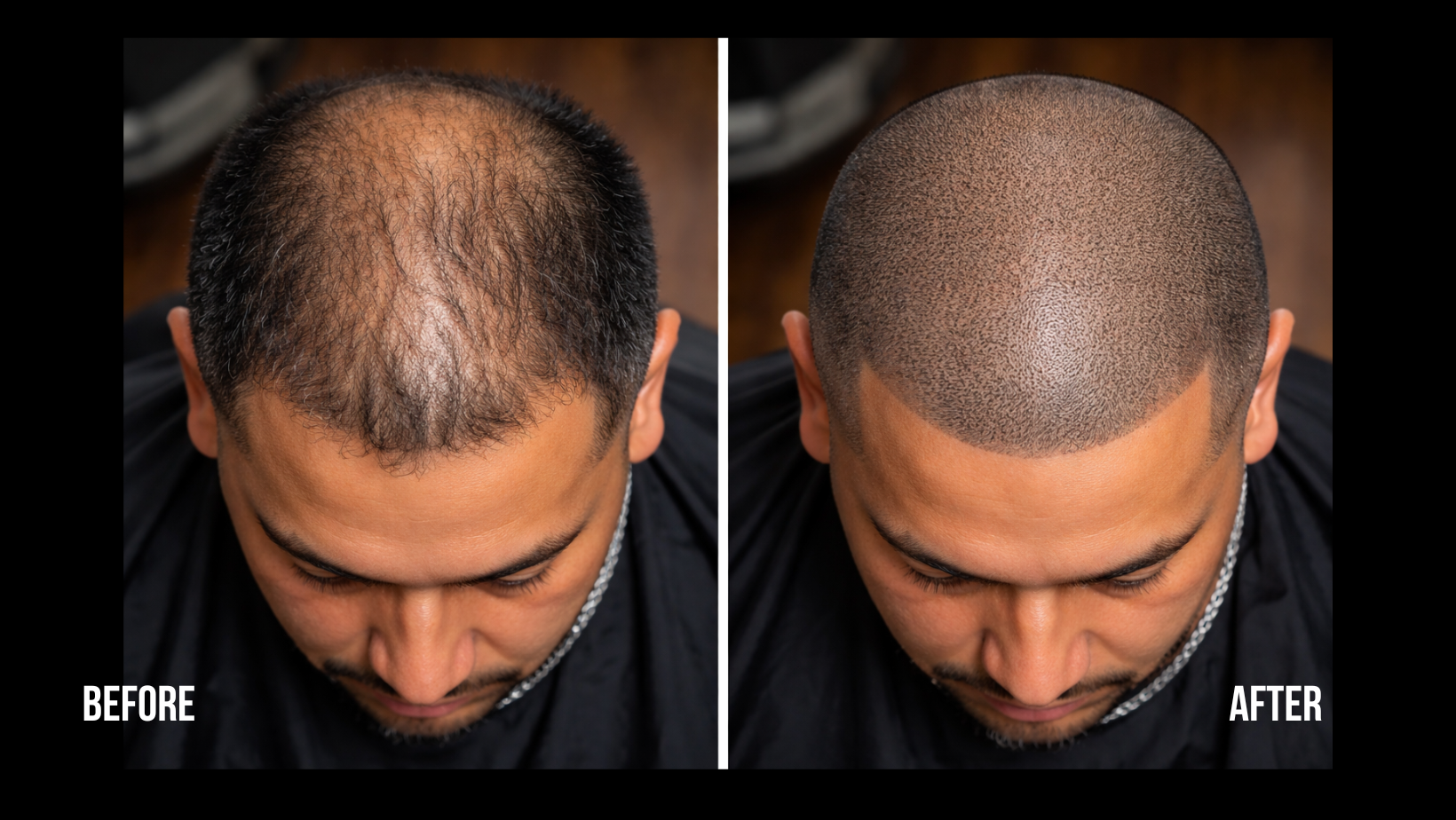
Before and after scalp micropigmentation. This is a representation only. (Work not from Brass Knuckles Ink)
What Is Scalp Micropigmentation?
A Cosmetic Technique That Replicates Hair Follicles
Scalp micropigmentation is a cosmetic procedure that deposits specialized pigment into the scalp to create the appearance of tiny hair follicles.
Unlike traditional tattoos, SMP uses:
specialized pigments
ultra-fine needles
controlled depth placement
These small pigment impressions mimic the natural look of shaved hair or increased density in thinning areas. The result is not actual hair growth, but rather the visual illusion of fuller hair.
Who Can Benefit from Scalp Micropigmentation?
Scalp Micropigmentation can help individuals experiencing various forms of hair loss. Common candidates include people with:
Male Pattern Baldness
SMP can recreate the appearance of a defined hairline and closely shaved scalp.
Thinning Hair
Pigment placed between existing hair can create the appearance of greater density.
Receding Hairlines
Scalp Micropigmentation (SMP) can rebuild a natural-looking hairline that frames the face.
Alopecia
Some individuals with alopecia choose Scalp Micropigmentation (SMP) to restore the appearance of hair follicles.
Hair Transplant Scars
Scalp Micropigmentation (SMP) can help camouflage visible scars left from previous hair transplant procedures. Because the technique is customizable, Scalp Micropigmentation (SMP) works for both men and women.
How Scalp Micropigmentation Works
Creating the Illusion of Hair Density
During the procedure, tiny pigment impressions are placed within the scalp in patterns that replicate natural hair follicles. The artist carefully considers:
hairline shape
follicle spacing
pigment color
scalp tone
The goal is to create natural density without appearing artificial. Hairlines are designed to suit each individual’s facial structure and age so the result looks realistic.
The SMP Treatment Process
Most scalp micropigmentation procedures are completed in two to three sessions. Each session gradually builds density and detail.
Session 1: Foundation Layer
The first session establishes the initial follicle pattern and hairline shape.
Session 2: Density and Depth
Additional pigment is layered to increase density and refine the look.
Session 3: Final Refinement
The final session balances the pigment and completes the natural follicle effect. Spacing the sessions allows the pigment to settle and ensures the most natural result possible.
Why People Choose Scalp Micro-pigmentation (SMP) Over Other Hair Loss Solutions
Scalp micropigmentation offers several advantages compared to traditional hair restoration methods.
Non-Surgical
There are no incisions, stitches, or lengthy recovery periods.
Immediate Visual Results
The appearance of fuller hair is visible immediately after treatment.
Low Maintenance
Once healed, SMP requires minimal upkeep beyond standard scalp care.
Cost Effective
Compared to surgical hair restoration procedures, SMP is often a more accessible option.
Natural Appearance
When performed by a skilled artist, the results look subtle and realistic. For many clients, SMP restores the appearance of structure and confidence without invasive procedures.
“Scalp micropigmentation isn’t about creating new hair — it’s about restoring the appearance of density and structure in a way that looks natural and balanced.”
How Long Does Scalp Micropigmentation Last?
Scalp Micro-pigmentation (SMP) is considered a long-lasting cosmetic procedure, but it is not permanent in the same way as traditional tattoos. Over time, pigment gradually softens due to:
sun exposure
natural skin regeneration
lifestyle factors
Most clients choose a refresh session every 3–5 years to maintain optimal definition. Proper scalp care and sun protection help preserve results longer.
Healing and Aftercare for SMP
Healing after scalp micropigmentation is typically straightforward. Most clients experience minimal downtime. During the first few days, it’s recommended to:
avoid excessive sweating
avoid direct sun exposure
keep the scalp clean and dry
follow the aftercare instructions provided by the studio
Within a few days, the scalp returns to normal and the pigment begins settling into its final appearance.
FAQ: Scalp Micropigmentation
Does scalp micropigmentation grow hair?
No. Scalp Micropigmentation (SMP) creates the appearance of hair follicles but does not stimulate hair growth.
Is scalp micropigmentation painful?
Most clients describe the sensation as mild discomfort similar to light tattooing.
Does SMP work for women?
Yes. Scalp Micropigmentation (SMP) is commonly used by women experiencing thinning hair to create the appearance of fuller density.
Can SMP cover hair transplant scars?
Yes. SMP can often camouflage visible scars from FUT or FUE hair transplant procedures.
Why Experience Matters for SMP
Scalp micropigmentation requires precision, artistic skill, and knowledge of scalp anatomy. An experienced practitioner understands how to:
design realistic hairlines
match pigment to scalp tone
create natural follicle spacing
avoid unnatural patterns
When done correctly, SMP should appear subtle and natural — never obvious.
Book Your Scalp Micropigmentation Consultation
If you’re experiencing thinning hair or balding and want to explore a non-surgical solution, scalp micropigmentation may be the right option. At Brass Knuckles Ink Tattoo Studio, we combine artistic precision with professional consultation to create natural-looking results tailored to each client.
Book your consultation here:
https://www.brassknucklesink.com
Let’s restore the appearance of confidence.
More from our Ink Canvas Blog:
Scar Cover-Up Tattoos: How Ink Can Redefine Your Skin: tattoos used for scar camouflage
Tattoo Touch-Ups: When and Why You Might Need One: how pigment maintenance works
Custom Tattoos: How to Bring Your Unique Idea to Life: the custom tattoo design process
Medical Resources :
American Academy of Dermatology
National Institutes of Health (NIH) – Hair Loss Research: “How Stress Causes Hair Loss”